If you are planning to engage in international trade with a Muslim country (whether in Middle East or Africa) here is a great help: http://www.muslimtrade.net/tradeguideline/ This site has great country specific information such as export/import regulations, legal framework, banking system, taxation, etc.
Some of the countries' profiles are missing for now, such as Jordan and UAE, for example, but the site promisses that "other muslim countries are on the way..." so it's worthwhile checking it out on regular basis for new additions.
Monday, March 26, 2007


Thursday, March 22, 2007
French Chambers of Commerce and Industry Overseas
I have a personal interest in France and French culture and the other day while researching some info on France I found a great website that would be useful for everyone interested in international business, not only business with France. This is the site of the Union of French Chambers of Commerce and Industry Overseas which brings together and supports the development of the 112 CCIs overseas in more than 75 countries: http://www.uccife.org/en/index.htm
Part of the site is, of course dedicated to France: you can obtain a lot of useful info about everything from doing business to travelling in France. The other part of the site, however, is dedicated to French Chambers of Commerce work overseas: here you can find market research, market information (i.e. useful publications) about most of those 75 countries around the world where French CCIs work.
The site can be viewed in French, English and Spanish.
Part of the site is, of course dedicated to France: you can obtain a lot of useful info about everything from doing business to travelling in France. The other part of the site, however, is dedicated to French Chambers of Commerce work overseas: here you can find market research, market information (i.e. useful publications) about most of those 75 countries around the world where French CCIs work.
The site can be viewed in French, English and Spanish.
Thursday, March 01, 2007
Dubai: Part III of III
As I promised finally here are some pictures of Dubai. It is surprising that there is no 1 good site about Dubai where you can see all the great photos so I borrowed these from a number of sites:
www.burj-al-arab.com , www.arabianeye.com, http://pixdubai.com, www.trekearth.com. But even neither of these photos give due credit to what is there in reality. I guess the only way to appreciate this place is to see it with your own eyes...


www.burj-al-arab.com , www.arabianeye.com, http://pixdubai.com, www.trekearth.com. But even neither of these photos give due credit to what is there in reality. I guess the only way to appreciate this place is to see it with your own eyes...


Thursday, February 15, 2007
Dubai: Part II of III
One of my readers has recently left a comment or rather a request to write about memorable things that happened to me while travelling. I hope this part of Dubai story will cover that.
I went to Dubai after having travelled nearly all over Europe and USA and not expecting to be very much surprised. Well, I was wrong: I was astonished, amazed and surprised by Dubai every step during my visit.
It started at the arrival gate of the Dubai International Airport. I had a greeting service booked for me: this is a kind of VIP service that is probably available in most of the airports but just for VERY important people. In Dubai you can easily book it for yourself for just 21 USD and it it highly recommended for first time visitors, elderly, passengers with kids - http://www.marhabaservices.com/ They meet you at the aircraft door, take you to the customs in a nice little car, you don't wait in line for visa clearance (and lines there are enormous!! it looks like an endless sea of people! - that was my only negative impression of Dubai) then they wait with you for your luggage as long as it takes and make sure that you get everything and in proper order and finally deliver you to the trustworthy hands of your hotel representative in the Arrival hall. And all the way they are nice, smiling and courteous which makes you feel that you are the most important person in the world.
My second surprise was waiting for me in my hotel room. I stayed in a regular 4 star hotel in the business district, nothing special, not like those amazing ones that Dubai has along the seashore, but still... When I entered my STANDARD room I was amazed to see that it is 3 times bigger than the regular room: first it had a regular bed, 2 night stands, an armchair a table and then you already expect to see the wall with a window - not at all! Right after that I had.... a castle! I assume it was a place for kids if I came with a family! The castle was as high as the room itself, had 4 walls and windows and a door and inside it had 2 beds, storage space and "gaming" place!
And after the castle I also had a sofa and a coffee table and THEN I had the wall and the window!
The thrid surprise was waiting for me on the street: there is virtually no system of public transport. Most people drive their own cars and only poor workers usually take buses and may be occasional tourists because taxis in Dubai are very cheap and this is the best means of transportation around the city excpet if you want to go to a major shopping mall in the rush hour: to get back you will have to wait in line for a taxi for 30 minutes at the mall..
All major siteseeing places will amaze you too. Definitely start with the Dubai National Museum to learn the story about this wonderufl city (much more than than I told you in my Post I about Dubai) : http://www.datadubai.com/entertainment/museums/dubai-museums/
Then go see the famous Burj Al Arab (known as the Sail) - the most expensive hotel in the world. They have excursions inside and you can also visit their skyview bar on the top or "aquarium" style restaurant at the bottom (it is below the sea level) http://www.burj-al-arab.com/ The only luxury of similar sort I saw in Versaille Palace, France but even there the rooms are so much smaller :-))
A lot of modern wonders you see in Dubai are considered to be the most technologically advanced in the world: try Wild Wadi water park to understand what I mean http://www.wildwadi.com/
Definitely go outside Dubai for a desert safari with dune rides, arabian BBQ, henna painting and belly dancing http://www.lamadubai.com/desertsafaris.html It will be like a "time machine" experience: from the ultra moredern to the good old days in arabian desert.
My final surprise was waiting for me at Dubai International Airport. I did expect a great duty free shopping but what I saw really exceeded my expectations: a huge golden palm tree in the middle of the hall which made the roof of an enormous gold jewlry store! People buy gold here not by item but by weight and this is how they are priced: you can only see the price of a gram of gold and then you ask a shop assistant to weigh whatever little masterpiece you've chosen.
To sum up, Dubai really NEVER stops surprising you and due to the fact that it is constantly developing, evolving and modernising, every time you go new wonders will be waiting for you on every corner.
I went to Dubai after having travelled nearly all over Europe and USA and not expecting to be very much surprised. Well, I was wrong: I was astonished, amazed and surprised by Dubai every step during my visit.
It started at the arrival gate of the Dubai International Airport. I had a greeting service booked for me: this is a kind of VIP service that is probably available in most of the airports but just for VERY important people. In Dubai you can easily book it for yourself for just 21 USD and it it highly recommended for first time visitors, elderly, passengers with kids - http://www.marhabaservices.com/ They meet you at the aircraft door, take you to the customs in a nice little car, you don't wait in line for visa clearance (and lines there are enormous!! it looks like an endless sea of people! - that was my only negative impression of Dubai) then they wait with you for your luggage as long as it takes and make sure that you get everything and in proper order and finally deliver you to the trustworthy hands of your hotel representative in the Arrival hall. And all the way they are nice, smiling and courteous which makes you feel that you are the most important person in the world.
My second surprise was waiting for me in my hotel room. I stayed in a regular 4 star hotel in the business district, nothing special, not like those amazing ones that Dubai has along the seashore, but still... When I entered my STANDARD room I was amazed to see that it is 3 times bigger than the regular room: first it had a regular bed, 2 night stands, an armchair a table and then you already expect to see the wall with a window - not at all! Right after that I had.... a castle! I assume it was a place for kids if I came with a family! The castle was as high as the room itself, had 4 walls and windows and a door and inside it had 2 beds, storage space and "gaming" place!
And after the castle I also had a sofa and a coffee table and THEN I had the wall and the window!
The thrid surprise was waiting for me on the street: there is virtually no system of public transport. Most people drive their own cars and only poor workers usually take buses and may be occasional tourists because taxis in Dubai are very cheap and this is the best means of transportation around the city excpet if you want to go to a major shopping mall in the rush hour: to get back you will have to wait in line for a taxi for 30 minutes at the mall..
All major siteseeing places will amaze you too. Definitely start with the Dubai National Museum to learn the story about this wonderufl city (much more than than I told you in my Post I about Dubai) : http://www.datadubai.com/entertainment/museums/dubai-museums/
Then go see the famous Burj Al Arab (known as the Sail) - the most expensive hotel in the world. They have excursions inside and you can also visit their skyview bar on the top or "aquarium" style restaurant at the bottom (it is below the sea level) http://www.burj-al-arab.com/ The only luxury of similar sort I saw in Versaille Palace, France but even there the rooms are so much smaller :-))
A lot of modern wonders you see in Dubai are considered to be the most technologically advanced in the world: try Wild Wadi water park to understand what I mean http://www.wildwadi.com/
Definitely go outside Dubai for a desert safari with dune rides, arabian BBQ, henna painting and belly dancing http://www.lamadubai.com/desertsafaris.html It will be like a "time machine" experience: from the ultra moredern to the good old days in arabian desert.
My final surprise was waiting for me at Dubai International Airport. I did expect a great duty free shopping but what I saw really exceeded my expectations: a huge golden palm tree in the middle of the hall which made the roof of an enormous gold jewlry store! People buy gold here not by item but by weight and this is how they are priced: you can only see the price of a gram of gold and then you ask a shop assistant to weigh whatever little masterpiece you've chosen.
To sum up, Dubai really NEVER stops surprising you and due to the fact that it is constantly developing, evolving and modernising, every time you go new wonders will be waiting for you on every corner.
Friday, February 02, 2007
Dubai: Part I of III
In my blog I haven’t yet written about the Middle East and today I want to share one of my stories about this region.
Dubai is one of the most fascinating places in the world I have been to. And I am usually most amazed by the ability of certain countries to grow from nearly nothing to incredible heights (and for that matter the inability of others in the region to do the same). The rise of South Korea or Mauritius (about which I already wrote in my blog) is very similar to the rise of Dubai though the latter took it a very much advanced level.
Even in the middle of the 20th century Dubai (which is a part of United Arab Emirates) was still a small fishing port which had 2 main possessions: the sands and the sea. How many small ports around the world can you name that have never developed into something as magnificent as Dubai? Probably dozens. But Dubai did. And its main secret is not oil: there is practically no oil in this part of UAE; the secret is the smart heads of the state that ruled this territory in the 20th century. They were able to see something that many other country rulers in the region still don’t see in the 21st century. They saw that freedom, international trade, good climate for investment and later tourism are key for the prosperity of the region. And just in about 40 years they achieved their dream!
Nowadays Dubai is one of the most modern cities I have ever seen. You drive to the outskirts of the city and there is only desert and… the best highway in the world. In the city itself the construction never stops, not even at night and Dubai is now constantly producing the architectural marvels never seen before: the most luxurious hotel in the world (the “Sail”), the Palm Island and the Burj Dubai that is currently built, which will become the highest building in the world. Dubai also has one of the fastest growing airports and international airlines that strive to be the best in global aviation industry and, frankly, they are not too far from their goal.
But most importantly this is one of the few states in the Middle East that gave equal rights to women. You will probably be surprised to know that the majority of students at UAE University and the Higher Colleges of Technology (HCT) are women. Besides the traditional fields of education and health, there are many women graduates working in various disciplines such as engineering, science, media and communications, computer technology, law, commerce, and the oil industry. There is even a women's corps within the Armed Forces.
If you want to learn more about this fascinating place, please, visit http://www.sheikhmohammed.co.ae/ and also wait for my 2nd post about Dubai where I will share particular interesting stories and impressions from my visit there. The post with photos will follow too.
Dubai is one of the most fascinating places in the world I have been to. And I am usually most amazed by the ability of certain countries to grow from nearly nothing to incredible heights (and for that matter the inability of others in the region to do the same). The rise of South Korea or Mauritius (about which I already wrote in my blog) is very similar to the rise of Dubai though the latter took it a very much advanced level.
Even in the middle of the 20th century Dubai (which is a part of United Arab Emirates) was still a small fishing port which had 2 main possessions: the sands and the sea. How many small ports around the world can you name that have never developed into something as magnificent as Dubai? Probably dozens. But Dubai did. And its main secret is not oil: there is practically no oil in this part of UAE; the secret is the smart heads of the state that ruled this territory in the 20th century. They were able to see something that many other country rulers in the region still don’t see in the 21st century. They saw that freedom, international trade, good climate for investment and later tourism are key for the prosperity of the region. And just in about 40 years they achieved their dream!
Nowadays Dubai is one of the most modern cities I have ever seen. You drive to the outskirts of the city and there is only desert and… the best highway in the world. In the city itself the construction never stops, not even at night and Dubai is now constantly producing the architectural marvels never seen before: the most luxurious hotel in the world (the “Sail”), the Palm Island and the Burj Dubai that is currently built, which will become the highest building in the world. Dubai also has one of the fastest growing airports and international airlines that strive to be the best in global aviation industry and, frankly, they are not too far from their goal.
But most importantly this is one of the few states in the Middle East that gave equal rights to women. You will probably be surprised to know that the majority of students at UAE University and the Higher Colleges of Technology (HCT) are women. Besides the traditional fields of education and health, there are many women graduates working in various disciplines such as engineering, science, media and communications, computer technology, law, commerce, and the oil industry. There is even a women's corps within the Armed Forces.
If you want to learn more about this fascinating place, please, visit http://www.sheikhmohammed.co.ae/ and also wait for my 2nd post about Dubai where I will share particular interesting stories and impressions from my visit there. The post with photos will follow too.
Friday, January 26, 2007
Law Library: International Taxes
I would like to introduce the Law Libray - fantastic resource for anyone doing business internationally: it provides an incredible listing of sites related to International Tax Laws per country (25 "most wanted" countries included from around the world from Australia to Russia to Brazil to South Africa). Whether you are an accountant, a lawyer or a marketing manager doing market analysis - this site will be a great help for you:
http://www.law-library.info/page/tax-international.htm
http://www.law-library.info/page/tax-international.htm
Thursday, January 18, 2007
Sea Ports Worldwide
This is a great resources for those working in the field of Export/Import, Transportation, Supply Chain and Logistics. The website below lists links to all major sea ports around the world:
http://impoyexpo.com/ports.htm
This comes very handy since you have all ports in one place and you don't need to spend your time looking around. One correction, though: the link to Russian port of Vladivostok is invalid, the proper link is: http://www.vladcomport.ru/index.html?eng
http://impoyexpo.com/ports.htm
This comes very handy since you have all ports in one place and you don't need to spend your time looking around. One correction, though: the link to Russian port of Vladivostok is invalid, the proper link is: http://www.vladcomport.ru/index.html?eng
Sunday, January 14, 2007
Environmental Issues
 This is a wall pannel from Chicago's Field Museum: "From so simple a beginning endless forms most beautiful and most wonderful have been, and are being evolved", - Charles Darwin.
I was thinking the other day that there is one truly international “thing” that unites all of us around the Globe. It is the environment, the nature. Air and oceans do not have boarders: the division is purely artificial, man-forced. That is why I believe that our efforts to preserve the environment cannot be country-specific they have to be international and coordinated globally.
I travel a lot and I see that the “eco-friendly” efforts are very much dispersed. European Union is very concerned with the issue. In Germany’s Frankfurt airport I recently saw 3-4 different types of garbage cans: for paper, plastic, glass and other stuff. When I was living in UK, since 2004 we had special blue plastic bags delivered home for free where we could deposit all recyclable waste.
EU also initiated a so-called “Stand-by” initiative as early as 1997. Stand-by power of electrical equipment is the electricity consumed by end-use devices when they are switched off or not performing their main function. Stand-by power consumption is an increasing fraction of the electricity use and the fast penetration of new and digital technology is likely to increase this share. It is estimated that stand-by power already accounts for about 10% of the electricity use in homes and offices of the EU Member States. A number of proactive steps has been taken by EU in this regard and you can read more details at http://energyefficiency.jrc.cec.eu.int/html/standby_initiative.htm
Central Europe, Russia included, are a bit behind. I know in my hometown there is a big buzz about energy saving light bulbs. They need less electricity to electric bill is smaller and therefore a lot of pensioners (my parents are a good example here) changed their light bulbs to more efficient ones. This is not much but at least it’s a step forward. In addition, in most families I know (my relatives and friends) there is a strict rule of not leaving any equipment on stand-by.
Now having lived in USA for more than a year I am very surprised that the question of environment protection is not as burning as elsewhere. My husband (who lived in USA for 5 years and traveled a lot around the country) says that he saw a couple of recycling bins for newspapers and soda tins but I haven’t seen any here yet. I am surprised that this issue is not widely discussed or implemented. May be I don’t know much about this country yet but here are my observations: tons of electricity are wasted (especially by equipment on stand-by), monstrous SUVs are everywhere (huge cars that consume a LOT of gallons of fuel per mile).
The one thing USA is good at, as it seems to me, is animal/plant life conservation. Only in Chicago there are 3 museums that I know of that in one way or the other devote their exhibitions to nature conservation. There are also 2 zoos, one of which is FREE to public where you can also learn about endangered species.
Washington zoo has recently had a baby panda born in captivity for the first time and the news was everywhere. It seemed to be nearly as important event as presidential elections. I even saw a 1-hour film on TV made to this occasion!
I don’t have a plan how to make environment protection a truly global effort or to force USA sign the Kyoto agreement. But I truly belief that if every single person out of 6 billion living on the planet makes at least 1 conservation effort on a regular basis the Earth will be a much better place to live.
My own New Year’s resolution is to reduce to minimum the amount of time my home/work appliances left on stand-by. I also already fulfilled my previous resolution: we bought one of the most fuel efficient cars on the market, new Honda Civic, not the hybrid yet (that will probably be the next step) and I also have been supporting World Wide Fund (WWF) for many years (you can see more details about this organization by clicking “Protect Nature” link on the right-hand side navigation panel).
I came to write this little abstract now because this has been the warmest winter ever, both in Chicago and in Russia where I am from. I do not want my children to celebrate their Christmases in raincoats listening to the stories about a strange substance called “snow” or extinct creatures called “penguins”. I am sure most of you feel the same way too! I strongly believe that this issue is not just governments’ responsibility, it is every one’s responsibility everywhere, because we don’t have Chinese nature or Argentinean nature or Egypt’s nature it’s all ours, it is international!
Wednesday, January 03, 2007
Foreign Direct Investment
Recenty I found a great market reserach tool analyzing Foreign Direct Investment Projects globally: www.locomonitor.com . Extensive reports can be ordered for a fee but snapshot reports and some extra reports are available for FREE per country.
The snapshot reports give you data for the last 4 years (2003-2006) and provide information on total figures, figures per country (investing in your chosen country), industry, by business function and data on the top 5 multinational companies investments.
In Downloads section you can find some extra free reports and presentations related to international business and FDI.
Finally, Locomonitor publishes free quaterly reports per certain topic. For instance, Q1 2006 report analyses China outbound FDI and Q3 2005 report is talking about Strategic Ivestment Locations for 2005.
I hope you find this information useful for your International Business/FDI projects.
The snapshot reports give you data for the last 4 years (2003-2006) and provide information on total figures, figures per country (investing in your chosen country), industry, by business function and data on the top 5 multinational companies investments.
In Downloads section you can find some extra free reports and presentations related to international business and FDI.
Finally, Locomonitor publishes free quaterly reports per certain topic. For instance, Q1 2006 report analyses China outbound FDI and Q3 2005 report is talking about Strategic Ivestment Locations for 2005.
I hope you find this information useful for your International Business/FDI projects.
Wednesday, December 27, 2006
Happy Holiday Season!
Winter time and mostly end of December - beginning of January is a Holiday Season for most of people around the world, of all religions and all nationalities. So here is my HAPPY HOLIDAY greetings to all my readers around the Globe.
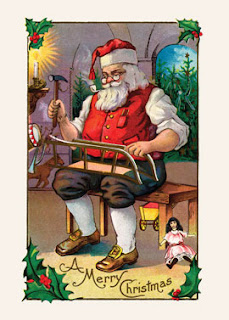


Most of the Christians have just had Holly Jolly Christmas - Merry Christmas and Happy New Year to everybody! In Russia, however, Christmas is on January 7 so this holiday is still to come. And one more thing about holidays in Russia: our Santa ("Father Frost") brings us presents not on Christmas, but on New Year's Eve and he usually comes with a company - his granddaugter, The Snowgirl. So below are 2 greeting cards: for my Western and Russian friends (Santa and Snowgirl):


Our Jewish friends have their own holiday this time of the year - Chanukah, which is the festival of light and it celebrates triumph of light over darkness. The festival lasts 8 days and in 2006 it was celebrated December 16 - 23. Happy Chanukah!

Our Muslim friends celebrate their holiday this time of year too - Eid-al-Adha or Feast of Sacrifice. It lasts for 3 days and commemorates Ibraham's (Abraham) willingness to obey God by sacrificing his son. Muslims believe the son to be Ishmael rather than Isaac as told in the Old Testament. According to the Koran, Ibrahim was about to sacrifice his son when a voice from heaven stopped him and allowed him to sacrifice a ram instead. In 2006 Eid-al-Adha will be celebrated on December 31. Happy Eid!

Finally, our Chinese friends will be celebrating Chinese New Year on February 18, 2007. And thought there is still time till that holiday I wanted to congratulate our Asian friends anyway since we are talking about Christmas and New Year. Year 2007 will be the year of Pig according to the Chinese calendar. I wish you Good Luck in the New Year!

You can find more beautiful e-cards for all your family, friends, colleagues and customers on these websites (where I found mine): http://www.101chinesenewyear.com/ , www.sendoutcards.com, www.mail.ru www.arabiccards.com
In my experience, it doesn't matter what nationality a person is - everyon will be very happy to receive a note from you on THEIR holiday. So send warm wishes and spread the joy!
Thursday, December 21, 2006
Russia in the Spotilight, Part II
One of my blog readers asked about the link to the articles about Russia I mentioned in my post called "Russia in the Spotlight". I didn't include the links to these articles because I read these articles in the hard copy of Business Week. But I value my reader's opinion and thus, I performed on-line search for these 2 artcile and here are the links:
1. http://www.businessweek.com/globalbiz/content/dec2006/gb20061207_520461.htm?chan=search
2. http://www.businessweek.com/magazine/content/06_51/b4014100.htm?chan=search
1. http://www.businessweek.com/globalbiz/content/dec2006/gb20061207_520461.htm?chan=search
2. http://www.businessweek.com/magazine/content/06_51/b4014100.htm?chan=search
Monday, December 18, 2006
How to be a successful International Business Consultant
At the end of November 2006 I was giving a presentation at the Institute of Management Consultants (IMC USA, Chicago Chapter) about skills to have and things to know to be a successful International Business consultant. I put the essence of this presentation into an article which I have recently published. You can read this article at http://www.emadvice.com/articles.html (article # 5)
Wednesday, December 13, 2006
Russia in the spotlight
If you are interested in doing busienss in/with Russia you should have a look at the recent Business Week magazine (December 18, 2006) There are 2 full articles about Russia, which in a way complement each other.
On the bright side it shows that Russian middle class is growing, hence the consumption is growing too including the demand for foreign made goods. In addition Russia is also popular with foreign investors and the stock market is up.
However on the dark side there is a question raised about the sustainability of such a growth since the most of the money inflow is oil money and only a very tiny percentage of population really benefit from it. And in addition all the recent political scandals and a growing controling role of the government are called "troubling signs" by foreign experts.
Both articles make a great reading (one is an essay style and the other is an interview with a famous Russian chess player, Garry Kasparov) and I just wanted to add my personal views on the topic. It is true that sometimes doing business in Russia is like walking on the mine field unless you have a map of dangerous areas. But even with the "map" you have to be very careful because there might be a dozen of addendums to it which you, as an outsider, might not know about. Or in the middle of your walk the government can intervene and change the rules of the game...
Why are people still coming then, you may ask? Well, I guess it's because the prize on the other side of the field is really attractive. Just look at the automotive industry: in the recent years a number of foreign car manufactures (Ford, Toyota, VW, etc.) started to open their huge manufacturing plants in Russia despite the fact that the Russian governemt is very protective of the Russian automotive industry and potentially it can interefere with the foreign manufactures' plans if they see a real threat. But Ford and the likes are still going for it because there is demand and hence, there is future. It might not be the bright and easy one but the potential is there.
On the bright side it shows that Russian middle class is growing, hence the consumption is growing too including the demand for foreign made goods. In addition Russia is also popular with foreign investors and the stock market is up.
However on the dark side there is a question raised about the sustainability of such a growth since the most of the money inflow is oil money and only a very tiny percentage of population really benefit from it. And in addition all the recent political scandals and a growing controling role of the government are called "troubling signs" by foreign experts.
Both articles make a great reading (one is an essay style and the other is an interview with a famous Russian chess player, Garry Kasparov) and I just wanted to add my personal views on the topic. It is true that sometimes doing business in Russia is like walking on the mine field unless you have a map of dangerous areas. But even with the "map" you have to be very careful because there might be a dozen of addendums to it which you, as an outsider, might not know about. Or in the middle of your walk the government can intervene and change the rules of the game...
Why are people still coming then, you may ask? Well, I guess it's because the prize on the other side of the field is really attractive. Just look at the automotive industry: in the recent years a number of foreign car manufactures (Ford, Toyota, VW, etc.) started to open their huge manufacturing plants in Russia despite the fact that the Russian governemt is very protective of the Russian automotive industry and potentially it can interefere with the foreign manufactures' plans if they see a real threat. But Ford and the likes are still going for it because there is demand and hence, there is future. It might not be the bright and easy one but the potential is there.
Friday, December 08, 2006
Links we LOVE
I wanted to say a few words about a section of this blog called "Links we Love".
These are not the links I am paid to promote but rather great examples of orgnizations that excell in doing business internationally: sensibly and for the greater good of the communities they opperate in. An I believe the future competitve landscape will be changed by the appearance of a bigger number of such organizations who sincerely care about communities and environment and are not just extracting cheap resources (labor, natural resources) from developing countries.
Protect Nature link takes you to Word Wide Fund for nature protection. This organization is famous all over the world and doesn't need a special introduction. I just admire their work in all the remoter coners of the globe and support them by being a member of WWF and taking action whenever I could.
Beauty+Purpose link takes you to the fashion site (scarves designer). The company's accessories are designed in USA and are hand made in Latin America. For once, this company tries to preserve a rare technique of knitting (doing greater good for the local community) and also it makes sure that a percentage of the proceeds from sales support organizations dedicated to Conservation of Beauty, Environment and Community.
International Art Gallery link is a link to an internet art gallery, which gives possibility for artists around the world to exhibit and sell their art. This is especially importnat for the countries where e-commerce capabilities are not well developed yet and the talanted artists do not have an outlet to promote their art internationally (Russia is a goof example here). A portion of procedes from sales is also spent on charitable purposes.
EMAdvice is my own company and my goal is to promote understanding and cooperation between cultures and countries for the benefit of all the sides. And in addition I support WWF, as I mentioned earlier and this is my contribution to "the greater good".
77 Sigma is a link to my friend's blog who is like myself a consultant and a great promoter of being internationally aware. A great expert on China, he runs an organizatioonal development consultancy whose slogan is "Make your Resources more Human."
Each of these links reperesent a case study if you wish that helps you understand what makes an organization successful internationally. Each from a different industry but with the similar purpose in mind.
These are not the links I am paid to promote but rather great examples of orgnizations that excell in doing business internationally: sensibly and for the greater good of the communities they opperate in. An I believe the future competitve landscape will be changed by the appearance of a bigger number of such organizations who sincerely care about communities and environment and are not just extracting cheap resources (labor, natural resources) from developing countries.
Protect Nature link takes you to Word Wide Fund for nature protection. This organization is famous all over the world and doesn't need a special introduction. I just admire their work in all the remoter coners of the globe and support them by being a member of WWF and taking action whenever I could.
Beauty+Purpose link takes you to the fashion site (scarves designer). The company's accessories are designed in USA and are hand made in Latin America. For once, this company tries to preserve a rare technique of knitting (doing greater good for the local community) and also it makes sure that a percentage of the proceeds from sales support organizations dedicated to Conservation of Beauty, Environment and Community.
International Art Gallery link is a link to an internet art gallery, which gives possibility for artists around the world to exhibit and sell their art. This is especially importnat for the countries where e-commerce capabilities are not well developed yet and the talanted artists do not have an outlet to promote their art internationally (Russia is a goof example here). A portion of procedes from sales is also spent on charitable purposes.
EMAdvice is my own company and my goal is to promote understanding and cooperation between cultures and countries for the benefit of all the sides. And in addition I support WWF, as I mentioned earlier and this is my contribution to "the greater good".
77 Sigma is a link to my friend's blog who is like myself a consultant and a great promoter of being internationally aware. A great expert on China, he runs an organizatioonal development consultancy whose slogan is "Make your Resources more Human."
Each of these links reperesent a case study if you wish that helps you understand what makes an organization successful internationally. Each from a different industry but with the similar purpose in mind.
Saturday, December 02, 2006
International Trade Newsletters
I've recently found a couple of useful newsletters to which you can subscribe for free and get loads of precious information if your business is related to International Trade. They will provide you with the latest news on trade, trade shows, laws, etc. Here they are:
International Trade Law Alert
http://www.exportimportlaw.com/newsletters/
Offers news up-dates on International Trade, Export, Import and Immigration Law.
Latin Business Chronicle
http://www.latinbusinesschronicle.com/app/frontpage.aspx
A fantastic source of information if you you are doing/planning to do business in Latin America
International Trade Law Alert
http://www.exportimportlaw.com/newsletters/
Offers news up-dates on International Trade, Export, Import and Immigration Law.
Latin Business Chronicle
http://www.latinbusinesschronicle.com/app/frontpage.aspx
A fantastic source of information if you you are doing/planning to do business in Latin America
Thursday, November 23, 2006
Thanksgiving
 Today is November 23, 2006 and it is Thanksgiving holiday in USA. I very often heard American say that Thanksgiving is the most American of all holidays and, probably, the most loved. If you are not American but you live in USA you still cannot forget what day it is today: first of all, on my way to the local supermarket I was constantly followed by a delicious smell of turkeys being roasted in every house in the neighborhood. Second of all, you couldn't even get a hair cut at noon - nearly everything is closed (except for supermarkets and drug stores that work half day today).
Here is a short history of Thanksgiving for my readers outside USA (the info taken from www.infoplease.com):
The first American Thanksgiving was celebrated in 1621, to commemorate the harvest reaped by the Plymouth Colony after a harsh winter. In that year Governor William Bradford proclaimed a day of thanksgiving. The colonists celebrated it as a traditional English harvest feast, to which they invited the local Indians. Days of thanksgiving were celebrated throughout the colonies after fall harvests. All thirteen colonies did not, however, celebrate Thanksgiving at the same time until October 1777. George Washington was the first president to declare the holiday, in 1789.
By the mid–1800s, many states observed a Thanksgiving holiday. Meanwhile, the poet and editor Sarah J. Hale had begun lobbying for a national Thanksgiving holiday. During the Civil War, President Abraham Lincoln, looking for ways to unite the nation, discussed the subject with Hale. In 1863 he gave his Thanksgiving Proclamation, declaring the last Thursday in November a day of thanksgiving. In 1939, 1940, and 1941 Franklin D. Roosevelt, seeking to lengthen the Christmas shopping season, proclaimed Thanksgiving the third Thursday in November. Controversy followed, and Congress passed a joint resolution in 1941 decreeing that Thanksgiving should fall on the fourth Thursday of November, where it remains.
And here are some fun facts about the Turkey, the most important food of the day:
1. There are a number of explanations for the origin of the name of Thanksgiving's favorite dinner guest. Some believe Christopher Columbus thought that the land he discovered was connected to India, and believed the bird he discovered (the turkey) was a type of peacock. He therefore called it 'tuka,' which is 'peacock' in Tamil, an Indian language.
Though the turkey is actually a type of pheasant, one can't blame the explorer for trying.
The Native American name for turkey is 'firkee'; some say this is how turkeys got their name. Simple facts, however, sometimes produce the best answers—when a turkey is scared, it makes a "turk, turk, turk" noise.
2. At one time, the turkey and the bald eagle were each considered as the national symbol of America. Benjamin Franklin was one of those who argued passionately on behalf of the turkey. Franklin felt the turkey, although "vain and silly", was a better choice than the bald eagle, whom he felt was "a coward".
3. According to the U.S. Department of Agriculture, more than 45 million turkeys are cooked and eaten in the U.S. at Thanksgiving
4. Domesticated turkeys cannot fly. Wild turkeys, however, can fly for short distances at speeds up to 55 miles per hour. They can also reach speeds of 25 miles per hour on the ground.
5. Turkeys can have heart attacks: turkeys in fields near the Air Force test areas over which the sound barrier was broken were known to drop dead from the shock of passing jets.
HAPPY THANKSGIVING TO EVERYBODY!
Sunday, November 19, 2006
Images of Mauritius
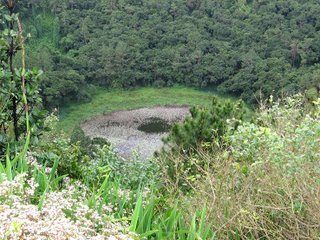
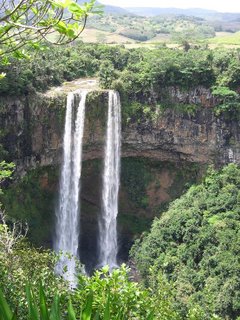
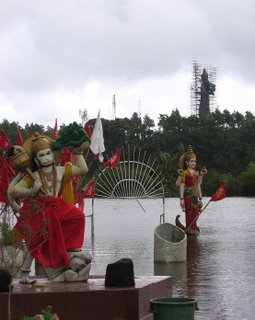
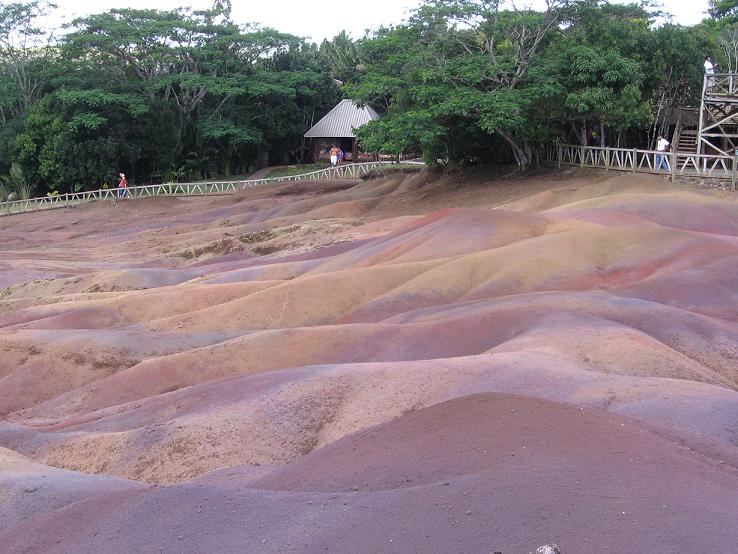
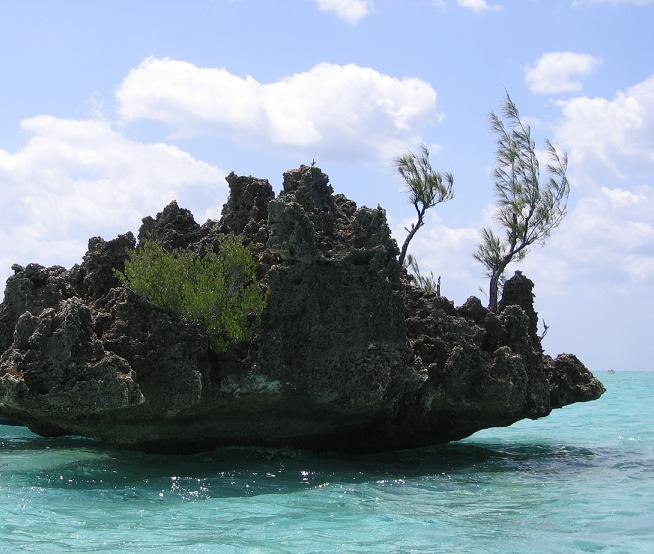
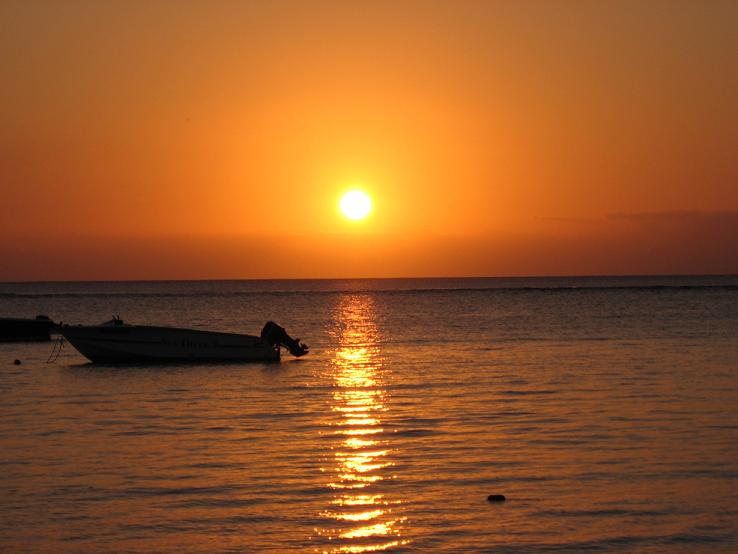
Here are some of my own images of Mauritius: ocean, volcano crater, watrefalls, coloured sends and much more!



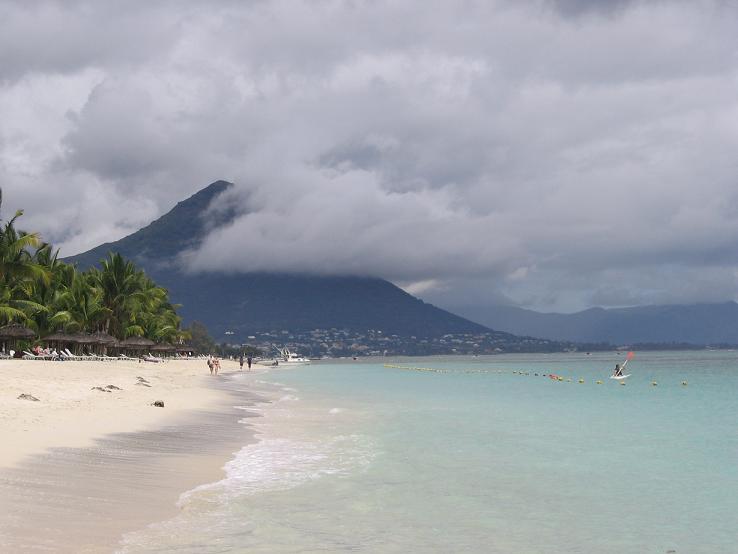
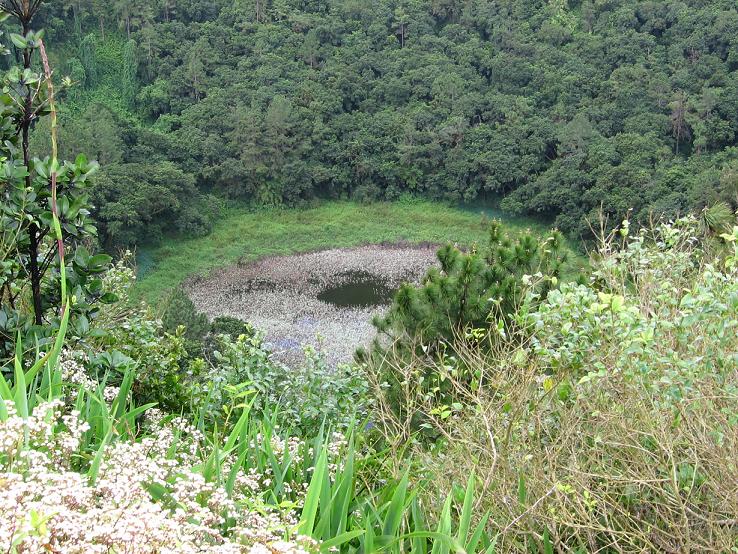

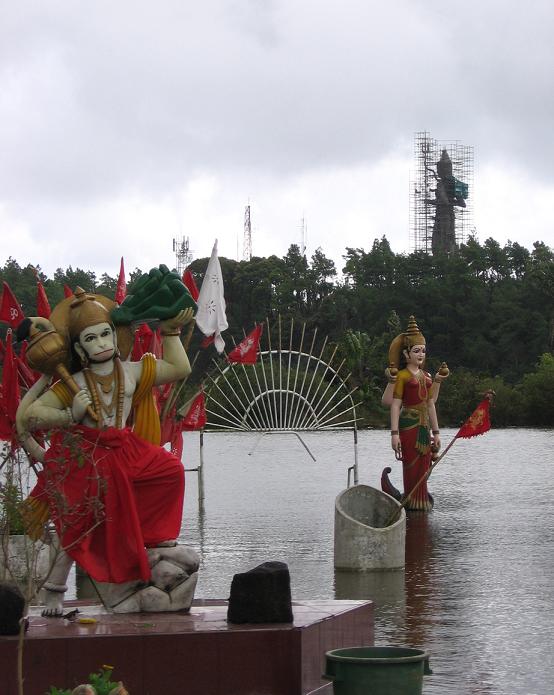
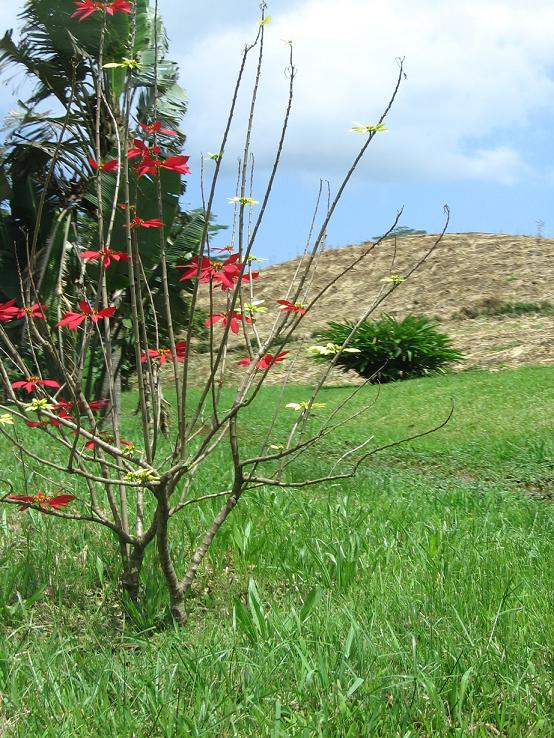
Mauritius
In this abstract I want to continue the tradition of writing stories about countries I visited and this one is about MAURITIUS.
I just wonder how many of my readers even know where this country is... Well, to solve the mystery, it is a small island in the Indian ocean to the east of Madagascar. My personal facination with this country is due to the fact that it is tiny, with not so many natural resources and yet it is one of the best developed countries in Africa.
Here is a short abstract about Mauritius economy from CIA World Factbook: "Since independence in 1968, Mauritius has developed from a low-income, agriculturally based economy to a middle-income diversified economy with growing industrial, financial, and tourist sectors. For most of the period, annual growth has been in the order of 5% to 6%. Sugarcane is grown on about 90% of the cultivated land area and accounts for 25% of export earnings. The government's development strategy centers on expanding local financial institutions and building a domestic information telecommunications industry. Mauritius has attracted more than 9,000 offshore entities, many aimed at commerce in India and South Africa, and investment in the banking sector alone has reached over $1 billion. Mauritius, with its strong textile sector , has been well poised to take advantage of the Africa Growth and Opportunity Act". Just look at the labels on the bunch of your cotton stuff (from underwear to T-shirts to jeans) and you will be surprised how many of them are produced in Mauritius.
But not only that: Mauritus worked hard on developing the tourist sector and having tried the benefits of it myself I can definitely say they did a fantastic job. Finally, Mauritius has established itslef as one of just a handful of diamond cutting places in the world. Graff's diamonds and jewlry manufacturing base is situated in Mauritius. Unfortunately I couldn't afford any of their masterpieces (which they absolutely are!) but I can assure you that I will never forget in my life what I saw in their factory's exhibition hall.
So what I was driving at is my amazement at how this tiny African country somewhere at the End of the World reinvented itself, which is still not possible for a lot of countries on the Black Continent...
In addition to the "economic wonder" Mauritius is a good example of how cultures blend with each other and live happily together. Here you can find strong French, Indian and creole influences and each of them just adds to the beauty and uniqueness of the island.
Finally, there is fascinating nature here: lush tropical vegetation in the wild and in botanic gardens, waterfalls, coloured sands, volcano and of course turquoise lagoons and millions of tropical fish.
To me there is only one definition for Mauritius - it is one of the most Precious Jems in the African crown and I strongly recommend everyone to see it for themselves.
I just wonder how many of my readers even know where this country is... Well, to solve the mystery, it is a small island in the Indian ocean to the east of Madagascar. My personal facination with this country is due to the fact that it is tiny, with not so many natural resources and yet it is one of the best developed countries in Africa.
Here is a short abstract about Mauritius economy from CIA World Factbook: "Since independence in 1968, Mauritius has developed from a low-income, agriculturally based economy to a middle-income diversified economy with growing industrial, financial, and tourist sectors. For most of the period, annual growth has been in the order of 5% to 6%. Sugarcane is grown on about 90% of the cultivated land area and accounts for 25% of export earnings. The government's development strategy centers on expanding local financial institutions and building a domestic information telecommunications industry. Mauritius has attracted more than 9,000 offshore entities, many aimed at commerce in India and South Africa, and investment in the banking sector alone has reached over $1 billion. Mauritius, with its strong textile sector , has been well poised to take advantage of the Africa Growth and Opportunity Act". Just look at the labels on the bunch of your cotton stuff (from underwear to T-shirts to jeans) and you will be surprised how many of them are produced in Mauritius.
But not only that: Mauritus worked hard on developing the tourist sector and having tried the benefits of it myself I can definitely say they did a fantastic job. Finally, Mauritius has established itslef as one of just a handful of diamond cutting places in the world. Graff's diamonds and jewlry manufacturing base is situated in Mauritius. Unfortunately I couldn't afford any of their masterpieces (which they absolutely are!) but I can assure you that I will never forget in my life what I saw in their factory's exhibition hall.
So what I was driving at is my amazement at how this tiny African country somewhere at the End of the World reinvented itself, which is still not possible for a lot of countries on the Black Continent...
In addition to the "economic wonder" Mauritius is a good example of how cultures blend with each other and live happily together. Here you can find strong French, Indian and creole influences and each of them just adds to the beauty and uniqueness of the island.
Finally, there is fascinating nature here: lush tropical vegetation in the wild and in botanic gardens, waterfalls, coloured sands, volcano and of course turquoise lagoons and millions of tropical fish.
To me there is only one definition for Mauritius - it is one of the most Precious Jems in the African crown and I strongly recommend everyone to see it for themselves.
Friday, November 10, 2006
Corruption discussion
I would like to invite you to discuss corruption as a phenomenon. It is obviously a barrier to business and trade develpopment and it is, unfortunately, most common in those countries which now represent the most attractive markets: India, China, Russia...
Corruption always has a money label attached to it but how do you define the following phenomenon, which doesn' t involve money transaction but still is a barrier to fair trade in the aforesaid countries: Mr X needs A from Mr Y. But instead of paying 100 USD to get A, Mr X promises Mr Y to help him with B because he knows that Mr Y needs B. Mr V and W who also need A will never get it and Mr S and T who need B will never get B because Mr X and Mr Y have a sort of agreement or arrangement with regards A-B exchange. A and B can represent products, services, favors - anything besides money. It looks like corruption it feels like one and it hurts like one. So what is it?
I cannot find a name for it, at least not in English, which is not my native language but the issue is that this phenomenon exists and florishes. In Russia there are networks of people (on personal, busness and government levels) that are tied together in this way. It doesn't matter that you are the best at what you do, someone esle will get the contract you want because, say, his wife is a personal dentist of the guy from the local authorities who is responsible for deciding who gets the contract under discussion.
It is extrememly difficult to do business in Russia in this respect for those who are not a part of the relevant network or if you don't know anyone who can connect you to the network. So even if the government solves the problem of corruption this phenomenon will still remain because it is a part of culture and mentality. So what do you think of that?
Corruption always has a money label attached to it but how do you define the following phenomenon, which doesn' t involve money transaction but still is a barrier to fair trade in the aforesaid countries: Mr X needs A from Mr Y. But instead of paying 100 USD to get A, Mr X promises Mr Y to help him with B because he knows that Mr Y needs B. Mr V and W who also need A will never get it and Mr S and T who need B will never get B because Mr X and Mr Y have a sort of agreement or arrangement with regards A-B exchange. A and B can represent products, services, favors - anything besides money. It looks like corruption it feels like one and it hurts like one. So what is it?
I cannot find a name for it, at least not in English, which is not my native language but the issue is that this phenomenon exists and florishes. In Russia there are networks of people (on personal, busness and government levels) that are tied together in this way. It doesn't matter that you are the best at what you do, someone esle will get the contract you want because, say, his wife is a personal dentist of the guy from the local authorities who is responsible for deciding who gets the contract under discussion.
It is extrememly difficult to do business in Russia in this respect for those who are not a part of the relevant network or if you don't know anyone who can connect you to the network. So even if the government solves the problem of corruption this phenomenon will still remain because it is a part of culture and mentality. So what do you think of that?
Thursday, November 09, 2006
Corruption worldwide
Corruption is an unfortunate cost of doing business in some countries. Transparency International http://www.transparency.org is a nonprofit organization that monitors corruption internationally, and on their website is an invaluable resource for research on markets and countries. The site has unbiased information that will help you see what's really going on in various countries. It is a great feed into the Risk Analysis part of your New Market Entry Strategy (see my New Market Entry Strategy post dated 10/24/2006)
There are regional and national surveys and indices, a Bribe Payers Index, a Global Corruption Barometer, the latest news, a Corruption Perceptions Index, tips on how to fight corruption, and much more.
There are regional and national surveys and indices, a Bribe Payers Index, a Global Corruption Barometer, the latest news, a Corruption Perceptions Index, tips on how to fight corruption, and much more.
Subscribe to:
Posts (Atom)